KIRSHI TECHNOLOGIES & CONSULTING PRIVATE LIMITED

Edit Content

Author name: kirshionline

Blog

Don’t Just Build an App, Build a Success Story

Don’t Just Build an App, Build a Success Story The need for creative and efficient mobile apps has increased dramatically in the current digital environment, where smartphones are an essential part of our everyday existence. Businesses also recognize the value of a well-developed app in the constantly shifting landscape of mobile technology. But it’s no longer enough to just have an app available in the marketplace. With millions of apps competing for user’s attention, building a mobile experience that goes beyond basic functionality and turns into complete success storytelling is key to success. Here’s where we, Kirshi Technologies, get in. Our comprehensive mobile app development service enables companies to produce innovative solutions that generate engagement, loyalty, and tangible outcomes.   Expertise that Delivers Tangible Results A vast majority of smartphone users today use mobile applications everywhere. So, it’s now quite simple for business investors to get into this highly competitive growing sector. To thrive in the market, a few key actions must be taken to manage the company profitably and withstand swiftly evolving technological advancements. At Kirshi Technologies, we take pleasure in our constant dedication to providing outstanding mobile app development services. Our skilled team of specialists, designers, and developers collaborate to produce customized mobile applications that not only satisfy your company’s needs but also charm the audience you are targeting.   Our Comprehensive Approach to Mobile App Development Our mobile app development process is thoroughly planned to ensure success at all stages. From executing extensive market research to creating attractive user interfaces and integrating cutting-edge technologies, we leave no opportunity unprocessed Here’s how our comprehensive strategy transforms your idea into a long-lasting success story:   Strategic Planning We look deeply into your business objectives, target audience, and industry trends to create a strong mobile app strategy that is consistent with your overall goals.   User-Centric Design Our skilled designers develop user-friendly interfaces that meet the requirements of the user first and drive engagement. Techniques based on provide ongoing communication and iterative development, allowing us to improve your software as we build it.   Robust Development Our expert developers use the newest technology and industry best practices to bring the mobile application idea to life with accurate attention to detail.   Seamless Integration We make sure that the user experience is friendly and effective across all touchpoints by seamlessly connecting your mobile app with your current systems.   Security & Data Privacy by Design Security is essential in the data-driven society we live in today. To earn your user’s trust, we place a high priority on secure coding techniques and data encryption. Our development methodology incorporates user privacy into its core to ensure compliance with changing requirements.   Innovation & Future-Thinking We identify trends rather than merely following them. To develop unique and engaging experiences, we investigate cutting-edge technologies such as virtual reality (VR) and augmented reality (AR).   Deep Collaboration & User Empath We go beyond simple demographics. We better understand user motivations, attitudes, and pain areas by doing user profile workshops. This encourages empathy-driven design, which guarantees that your application expects user requirements and produces a flawless, frustration-free experience.   Driving Business Growth through Mobile App Excellence When you work with us for mobile app development, you’re not only developing an app; you’re also generating a success tale. Our track record of delivering creative and impactful mobile solutions has helped many businesses accomplish their growth goals. Our mobile app development services have a long-lasting impact on your company, from improved operational efficiency and income streams to higher brand awareness and consumer engagement. Discover for yourself the impact that genuine skill and commitment can have on your mobile app development process. Conclusion At Kirshi Technologies, we think that every mobile app has the potential to be a game changer. Our goal is to help businesses see this potential and make an investment in mobile apps that will succeed in the market. Whether you want to create a new mobile app or improve an existing one, our team of specialists is ready to help you every step of the way. Contact us about your mobile app development project right now and allow us to help you in creating a successful tale. Social Share: Previous PostNext Post Recent blogs April 10, 2024 Revolutionizing Healthcare with Mobile Apps Revolutionizing Healthcare with Mobile Apps Imagine a world where taking… March 29, 2024 Mind Blown! Owning your ChatGPT: The Future is… Mind Blown! Owning your ChatGPT: The Future is here Have… March 28, 2024 Don’t Just Build an App, Build a Success… Revolutionizing Healthcare with Mobile Apps Imagine a world where taking… Load more

Blog

5 Convincing Reasons Why Flutter is Your Ultimate Choice for mobile app development

5 Convincing Reasons Why Flutter is Your Ultimate Choice for mobile app development Introduction: In the ever-evolving landscape of mobile app development, choosing the right framework can be daunting. Flutter, Google’s UI toolkit for building natively compiled applications for mobile, web, and desktop from a single codebase, stands out as a powerful and efficient option. In this article, we’ll explore five compelling reasons why Flutter should be your top choice for mobile app development services.   Cross-Platform Compatibility: Flutter allows developers to write code once and deploy it across multiple platforms, including iOS, Android, and even web and desktop applications. Employing a unified codebase enables businesses to streamline development efforts, conserving valuable time and resources that would otherwise be dispersed across multiple platform-specific app iterations. The hot reload feature in Flutter accelerates the development process, enabling real-time updates to the app’s interface without requiring a full restart, thus boosting productivity.   Stunning UIs with Flutter’s Widgets: Flutter offers a rich set of customizable widgets that enable developers to create visually appealing and responsive user interfaces. With Flutter’s extensive catalog of pre-designed widgets, developers can easily implement complex UI designs and achieve native-like performance across platforms. The flexibility and ease of customization provided by Flutter’s widgets empower developers to create unique and engaging user experiences that resonate with their target audience .   Performance and Speed: Flutter’s architecture is designed for high performance, delivering smooth animations and fluid user interactions even on less powerful devices. By compiling Flutter code directly to native machine code, rather than interpreting it through a JavaScript bridge, Flutter apps exhibit superior performance and faster startup times. The lightweight nature of Flutter apps ensures efficient memory usage, resulting in a snappy user experience and reduced battery consumption.   Strong Community Support and Growing Ecosystem: Flutter boasts a vibrant and rapidly growing community of developers, designers, and enthusiasts who actively contribute to its ecosystem. The availability of third-party packages and plugins extends Flutter’s capabilities, allowing developers to integrate additional functionalities into their apps with ease. Comprehensive documentation, online forums, and community-driven resources ensure that developers can find support and solutions to their queries quickly, accelerating the development process.   Future-Proof Your App with Flutter: Flutter’s commitment to continuous improvement and innovation ensures that developers have access to the latest features and enhancements. Google’s backing and strategic investments in Flutter signify its long-term viability and position as a leading framework for cross-platform app development. By choosing Flutter for your mobile application development projects, your future-proof your applications, ensuring compatibility with upcoming platform updates and emerging technologies.   Conclusion In conclusion, Flutter emerges as the ultimate choice for mobile app development, offering unparalleled cross-platform compatibility, stunning UI capabilities, exceptional performance, strong community support, and a promising future. Whether you’re a seasoned developer or a business looking to build your next mobile app, Flutter provides the tools and resources you need to succeed in today’s competitive digital landscape. Social Share: Previous Post Recent blogs March 18, 2024 5 Convincing Reasons Why Flutter is Your Ultimate… How Blockchain Keeps Your Data Safe and Private Introduction: In… March 2, 2024 How Blockchain Keeps Your Data Safe and Private How Blockchain Keeps Your Data Safe and Private Introduction: In… February 24, 2024 Blockchain: Beginner’s Manual to Understanding the Basics Blockchain: Beginner’s Manual to Understanding the Basics In the modern… Load more

Blog

How Blockchain Keeps Your Data Safe and Private

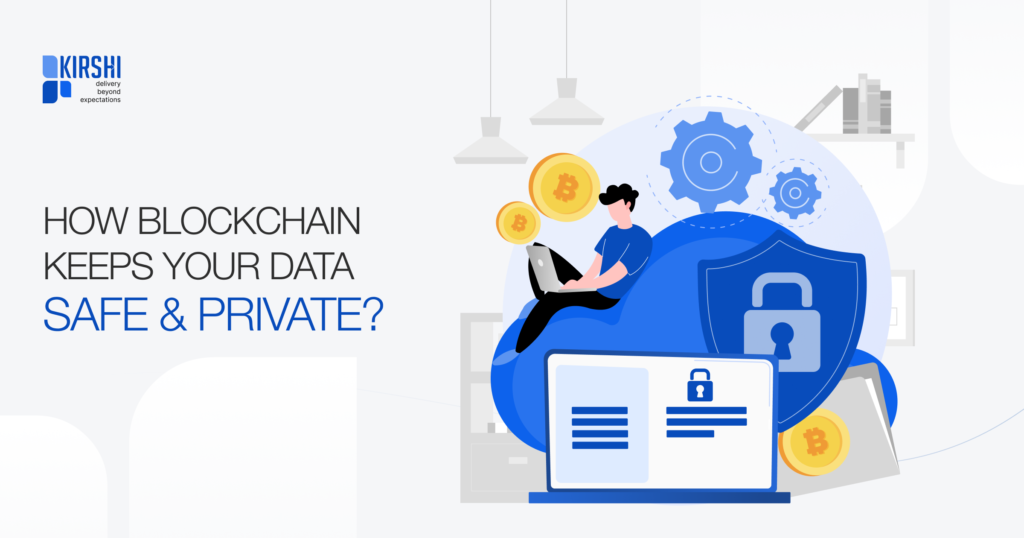
How Blockchain Keeps Your Data Safe and Private Introduction: In today’s digital era, safeguarding our information is crucial. However, with the vast amount of data circulating, ensuring its security can be challenging. This is where blockchain development services steps in! Think of it as a highly secure digital notebook that effectively protects all your valuable data. Let’s delve into how blockchain assists us in maintaining the privacy and security of our data.   Understanding Distributed Ledger Technology: Imagine DLT as a vast network of interconnected digital ledgers, dispersed across numerous nodes rather than centralized in one location. Each transaction or piece of data is cryptographically sealed and added to the ledger in a manner that renders tampering virtually impossible. Moreover, the distributed nature of DLT means that no single entity holds absolute control, mitigating the risk of a singular point of failure.   Protecting Your Privacy: With traditional systems, our data is often stored in one central spot. But that’s risky because if that spot gets hacked, all our info could be exposed. With blockchain, your data is spread out, making it much harder for hackers to break in. Plus, you control who gets access to your information through private keys, sort of like secret passwords that only you have.   Securing Data Transactions: Every time something new is added to the blockchain, it’s encrypted and connected to everything that came before it. This creates a strong chain of information that’s tough to break. Before anything is added, many people must agree that it’s legit, which helps prevent fraud or cheating.   Where Blockchain Helps: Blockchain isn’t just for tech geeks. It’s useful in lots of everyday things! For example, in banking, it can help us make secure transactions without needing a bank. In healthcare, it can keep our medical records safe and private. Even in shopping, blockchain and also smart contracts blockchain can help us track where our products come from, making sure they’re genuine.   Challenges to Overcome: While blockchain is awesome, it’s not perfect. Sometimes it can be slow or use up a lot of energy. There are also rules and regulations to figure out, so everyone plays fair. And getting different blockchain systems to work together smoothly isn’t always easy. But as we learn more and improve, these challenges can be overcome.   Conclusion: Blockchain is like a superhero for keeping our data safe and private. It’s decentralized, secure, and transparent, making it a powerful tool in today’s digital age. From banking to healthcare to shopping, blockchain is making a big difference in how we protect our information. Sure, there are challenges to tackle, but with time and effort, blockchain can continue to be a force for good in our online world. Author: Chitraarasu Position: Developer Social Share: Previous Post Recent blogs March 2, 2024 How Blockchain Keeps Your Data Safe and Private Blockchain: Beginner’s Manual to Understanding the Basics In the modern… February 24, 2024 Blockchain: Beginner’s Manual to Understanding the Basics Blockchain: Beginner’s Manual to Understanding the Basics In the modern… February 14, 2024 Exploring the Impact of Blockchain Technology on web… Exploring the Impact of Blockchain Technology on web on development… Load more

Blog

Blockchain: Beginner’s Manual to Understanding the Basics

Blockchain: Beginner’s Manual to Understanding the Basics In the modern era dominated by digital technologies, the term ‘blockchain’ is becoming more prevalent in discussions spanning diverse sectors. Whether in finance, healthcare, supply chain management, or voting systems, blockchain technology is fundamentally altering the landscape of data storage, verification, and sharing. However, what precisely is blockchain, and how does it function? In this introductory guide, we will explore the foundational principles of blockchain technology to furnish you with a comprehensive grasp of its essentials.   What is Blockchain? Fundamentally, blockchain development services as a decentralized, distributed ledger technology, facilitating the recording of transactions across numerous computers in a manner that prioritizes security, transparency, and immutability. Unlike traditional centralized databases where a single entity controls the data, blockchain operates on a peer-to-peer network where each participant, or node, has a copy of the entire ledger.   Key Components of Blockchain Blocks: Within blockchain, data is organized into blocks, each comprising a roster of transactions. These blocks are sequentially linked to construct a chain, hence the term ‘blockchain.’ Decentralization: A core attribute of blockchain is its decentralized structure. Instead of depending on a centralized authority like a bank or government for transaction validation, blockchain relies on consensus mechanisms to achieve agreement among network participants. Cryptography: Blockchain integrates cryptographic techniques to safeguard the data stored within each block. Each block contains a unique cryptographic hash, acting as a digital fingerprint, ensuring data integrity and immutability. Consensus Mechanisms: Consensus mechanisms are protocols facilitating agreement among nodes in a blockchain network regarding transaction validity. Common consensus mechanisms encompass Proof of Work (PoW), Proof of Stake (PoS), and Delegated Proof of Stake (DPoS). contract development agency: hese are self-executing agreements with terms encoded directly into code. They automatically enforce and execute the terms of the agreement when predefined conditions are met, eliminating the need for intermediaries.   How Does Blockchain Work? When a new transaction takes place, it is disseminated to all nodes within the network. Each node validates the transaction according to predefined consensus rules before incorporating it into a new block. Upon verification, the block is appended to the blockchain and distributed throughout the network. This decentralized and transparent process guarantees the security and immutability of transactions, making them resistant to tampering.   Applications of Blockchain Technology Blockchain technology has a wide range of applications across various industries, including: Financial Services: Blockchain has the potential to revolutionize the financial sector by enabling faster and more secure transactions, reducing costs, and eliminating intermediaries. Supply Chain Management: Blockchain can provide transparency and traceability in supply chains, allowing businesses to track the movement of goods from the point of origin to the end consumer. Healthcare: Blockchain offers a secure means to store and exchange patient data, fostering privacy and interoperability among diverse healthcare providers. Voting Systems: Blockchain can be used to create tamper-proof voting systems, enhancing the integrity and transparency of electoral processes.   Conclusion In conclusion, blockchain technology holds immense promise in revolutionizing the way we store, verify, and share data.nft marketplace development company by providing a decentralized, transparent, and secure platform, blockchain has the potential to transform various industries and reshape the future of digital transactions. As you continue your journey into the world of blockchain, remember that this technology is still evolving, and its full potential is yet to be realized. Social Share: Previous Post Recent blogs February 24, 2024 Blockchain: Beginner’s Manual to Understanding the Basics Blockchain: Beginner’s Manual to Understanding the Basics In the modern… February 14, 2024 Exploring the Impact of Blockchain Technology on web… Exploring the Impact of Blockchain Technology on web on development… January 27, 2024 The internet’s next frontier and how it’s changing… The internet’s next frontier and how it’s changing the game… Load more

Blog

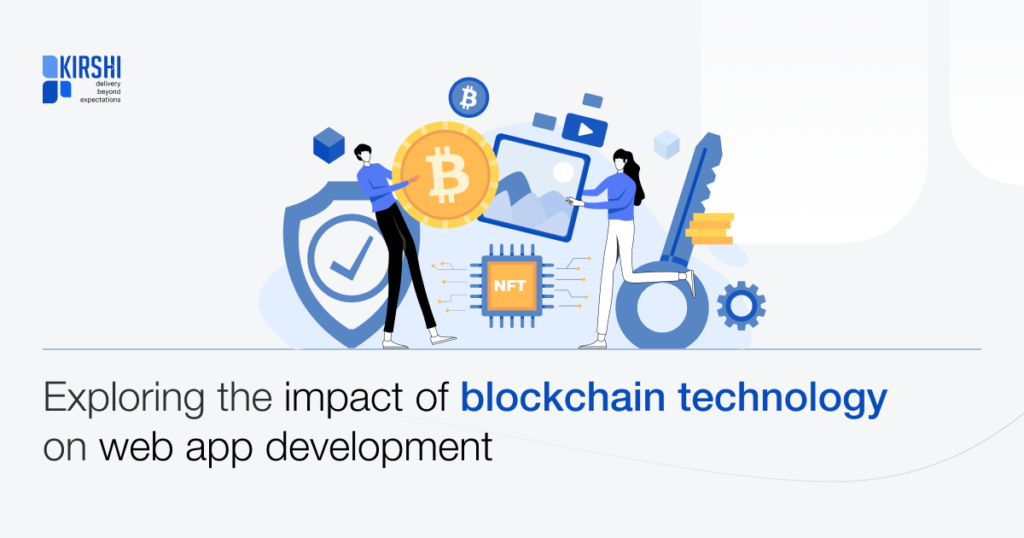
Exploring the Impact of Blockchain Technology on web on development

Exploring the Impact of Blockchain Technology on web on development Are you excited to see how two amazing technologies come together? Brace yourself for an amazing exploration into blockchain’s impact on web development. In recent years, there has been a notable trend of incorporating blockchain technology into different industries, and the field of webapp development is no exception. Originally developed to ensure secure and transparent cryptocurrency transactions, this innovative technology has expanded into a versatile tool with significant implications for how we approach the ideation, design, and execution of web-based solutions.   Impact of Blockchain on Web Development Blockchain technology has transformed the landscape of web development, ushering in new opportunities for developers and businesses alike. Let’s explore the various impacts of blockchain on web development:   Enhanced Security: Utilizing cryptography, blockchain technology ensures secure transactions and protects user data. This cryptographic security makes it more difficult for hackers to compromise data or manipulate transactions, as they would need to breach multiple nodes on the network. Decentralization: Decentralization stands as a core principle of blockchain technology. Instead of relying on a central authority, information and data are distributed across a network of computers. This decentralized approach enhances security by eliminating single points of failure and promotes transparency, as all network participants can access data and transactions. Smart Contracts: Smart contracts signify an innovative use of blockchain technology. These self-executing agreements automatically enforce the terms of an agreement, reducing the need for intermediaries and improving efficiency. Efficient and Cost-effective Transactions: Traditional payment systems often face delays and increased costs due to intermediaries. With blockchain, transactions become faster and cheaper since there are no intermediaries to slow down the process or inflate costs. Emergence of New Business Models: The integration of blockchain technology in web development unlocks new business models previously inaccessible. This includes decentralized applications (dApps), tokenization, and other innovative blockchain solutions. Tokenization, for instance, enables businesses to digitize assets like real estate or artwork. Interoperability: While blockchain technology offers numerous benefits, challenges such as interoperability between different blockchains exist. However, ongoing efforts to develop interoperability solutions aim to overcome these challenges, creating new opportunities for web designers and businesses. Enhanced Trust: Blockchain records transactions permanently and in an immutable manner, fostering trust among participants. This trust is especially vital in areas such as supply chain management, where maintaining integrity and security is paramount. Use Cases of Blockchain in Web Development Blockchain technology has grown beyond its original use in cryptocurrencies and is now changing various industries, as well as web development. Here are some ways blockchain is used in web development: Smart Contracts Developers utilize smart contracts blockchain platforms like Ethereum to create self-executing contracts with predefined terms directly coded into the blockchain. These contracts enable trustless execution of transactions and operations within web applications, automating processes without middlemen. They play a crucial role in various applications, such as handling supply chain operations, enforcing crowdfunding campaign terms, and facilitating secure transactions transparently. Digital Identity Management Blockchain’s security features allow web developers to create decentralized digital identity solutions. Users can choose what information to share with different services while keeping their privacy, giving them more control over their data. This approach lowers the risk of identity theft and provides a secure way to authenticate online applications. Decentralized Hosting Traditional web hosting uses centralized servers, making websites prone to downtime and performance issues. Blockchain-based hosting distributes website data across a network of nodes, ensuring better availability and resilience to outages. This decentralized hosting approach leads to more reliable and accessible web applications. Decentralized Applications (DApps) Blockchain enables the creation of decentralized applications (DApps) that don’t rely on central servers but operate on a network. DApps use blockchain’s security and openness to give users more privacy and control over their data. By removing single points of failure, DApps become more durable and less vulnerable to online attacks. Supply Chain Transparency lockchain technology allows for the immediate tracking and authentication of goods throughout the supply chain. Web developers have the ability to craft supply chain management solutions that furnish clear and immutable records detailing the origins, movements, and legitimacy of products. This diminishes the likelihood of counterfeit items and bolsters consumer confidence in the integrity of the supply chain. Advancing Integration with IoT and AI Blockchain technology is revolutionizing web development by integrating with emerging technologies like IoT and AI. It ensures secure, transparent, and scalable communication within interconnected systems, shaping the future of web development. Our IoT integration services seamlessly incorporate blockchain, IoT, and AI, empowering businesses to maximize the potential of these revolutionary technologies in their web applications. Conclusion Blockchain technology’s introduction has revolutionized the world of web development, opening up exciting new opportunities and prospects. From facilitating secure and transparent transactions to enabling decentralized applications, the influence of blockchain is undeniable. To leverage this transformative potential, businesses can partner with Kirshi Technologies. As a leading web development company proficient in blockchain integration, we can guide them towards a decentralized and trustworthy future! Get in touch with us now. Social Share: Previous Post Recent blogs February 17, 2024 Exploring the Impact of Blockchain Technology on web… The internet’s next frontier and how it’s changing the game… January 27, 2024 The internet’s next frontier and how it’s changing… The internet’s next frontier and how it’s changing the game… January 18, 2024 The future of web development with 2023 trends The future of web development with 2023 trends In the… Load more

Blog

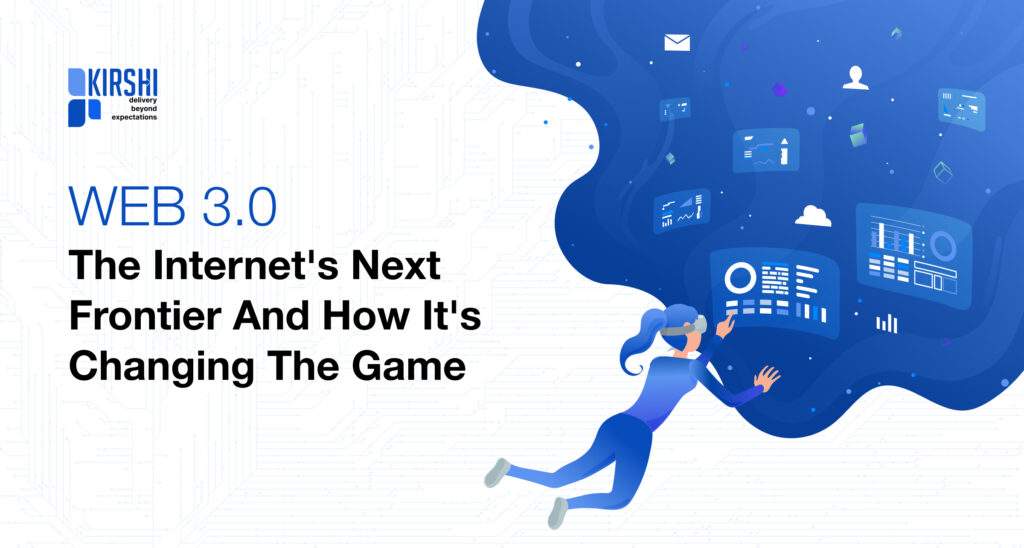
The internet’s next frontier and how it’s changing the game

The internet’s next frontier and how it’s changing the game The internet has evolved significantly since its start, with every iteration presenting fresh prospects. Web 1.0 was a basic information platform, while Web 2.0 introduced social media and interactivity. Now, we’re witnessing the emergence of Web 3.0 as the next era of the internet in the new century. Hello there, technophiles! Are you ready to step into the internet’s future? Buckle up, because we’re about to dive into the amazing world of Web 3.0 and buckle up because we’re about to dive into the amazing world of Web 3.0 and its impact on various industries.   Definition of Web 3.0 Prior to diving into the facts, let’s first define Web 3.0. Simply stated, Web 3.0 is the internet’s next generation, with the objective of creating a more decentralized, interoperable, and secure web. Web 3.0 is the most recent stage in the advancement of the internet, aiming to create a decentralized ecosystem through the use of technologies such as AI, machine learning, and blockchain. This new technological dimension aims to address the flaws in the current internet/online ecosystem.   The Revolutionary Journey of the Internet: From Web 1.0 to Web 3.0   Importance of Web 3.0 Web 3.0 builds on the capabilities of web 2.0, offering a more immersive and user-friendly experience while prioritizing personal data protection and privacy. Decentralized applications (dApps) built on peer-to-peer networks or blockchains enable web 3.0 sites to be permissionless and trustless. Web 3.0 could incentivize user interaction and content creation, potentially leading to a surge in innovation and broader access to income-generating opportunities. Non-fungible tokens (NFTs) could play a multi-functional role in web 3.0, including access tickets to private societies within the web. Web 3.0 could fundamentally alter how people interact on the web and how companies monetize goods and services, challenging the dominance of web 2.0 giants that hoard and centralize customer data. Web 3.0 business opportunities are likely to center around personalized web products and services, with marketing capabilities that balance privacy and personalization. Blockchain technology could improve customer service and supply chain monitoring in web 3.0, reducing shortages and speeding up deliveries. Web 3.0 is important as the infrastructure for the metaverse, a proposed 3D virtual world that relies on the blockchain or similar technology and AI to make it more responsive to users. The metaverse and web 3.0 are interdependent and will likely evolve in tandem.   Characteristics of Web 3.0 To better understand what makes Web 3.0 so unique, let’s explore its key characteristics:   Decentralization The goal of Web 3.0 is to establish a network that operates on a peer-to-peer basis and eliminates the requirement for intermediaries.   Semantic Web The Semantic Web represents the next stage of development for the internet, building upon existing web technologies to enable the creation, sharing, and discovery of content based on a deeper understanding of its meaning, rather than just keywords or numbers. It allows for more sophisticated search and analysis capabilities that are based on the ability to comprehend the true meaning of words.   Interoperability Web 3.0 allows different blockchains and protocols to communicate and interact with each other seamlessly.   Artificial Intelligence Artificial Intelligence plays a vital role in Web 3.0, allowing computers to recognize information like humans for faster and more accurate results. It enhances intelligence to meet user needs through natural language processing.   3D Graphics Web 3.0 heavily employs three-dimensional design in various websites and services, including but not limited to museum guides, computer games, and e-commerce, among others.   Trust and security Web 3.0 leverages cryptography and consensus algorithms to ensure the integrity and security of data and transactions.   Data ownership and privacy Web 3.0 puts users in control of their data and allows them to decide who can access it and for what purpose.   Connectivity Web 3.0’s use of semantic metadata facilitates greater information connectivity, leading to an enhanced user experience that utilizes all available information.   Ubiquity Information can be accessed through multiple applications, and devices are interconnected through the web, making it possible to access services from anywhere in the world.   Technologies powering Web3.0 To achieve these characteristics, Web3.0 relies on a set of cutting-edge technologies, including:   NFTs NFTs, which are unique cryptographic assets, play a vital role in creating and verifying ownership of digital assets on Web 3.0 and will impact how valuable items are produced and traded.   DApps Decentralized applications (dApps) are open-source apps built on decentralized blockchains that allow for easy modification by others and records of changes on the blockchain. Examples include middleware, charity apps, and social media platforms.   Cryptocurrencies Bitcoin and other cryptocurrencies are digital currencies based on blockchain technology, which use cryptography to secure transactions and ownership changes. Supporters see them as the main currency of Web 3.0.   DLT and Smart Contracts Distributed Ledger Technology (DLT) makes it highly unlikely for databases to be hacked. By implementing smart contracts on the blockchain, DLT eliminates the need for intermediaries, thus enabling a trustless society. DLT’s decentralized approach enhances transparency on the web.   Blockchain A blockchain is a decentralized digital ledger that securely and transparently records transactions. It operates through a network of computers that collectively maintain the database. Smart contracts can also be executed on the blockchain, enabling automation and decentralization of various processes.   DeFi DeFi, an emerging blockchain technology, maybe the foundation of Web 3.0’s decentralized financial services, providing a transparent and accessible financial system by enabling peer-to-peer transactions without intermediaries.   Impact of Web 3.0 on Industries Now let’s get to the exciting part: how Web 3.0 is transforming various industries.   Finance and Banking Decentralized finance (DeFi) applications enabled by Web 3.0 are disrupting traditional finance and banking, allowing users to access financial services without intermediaries.   Healthcare The healthcare industry could undergo a revolutionary transformation with the help of Web 3.0, as it has the potential to enhance data sharing, interoperability, and patient

Blog

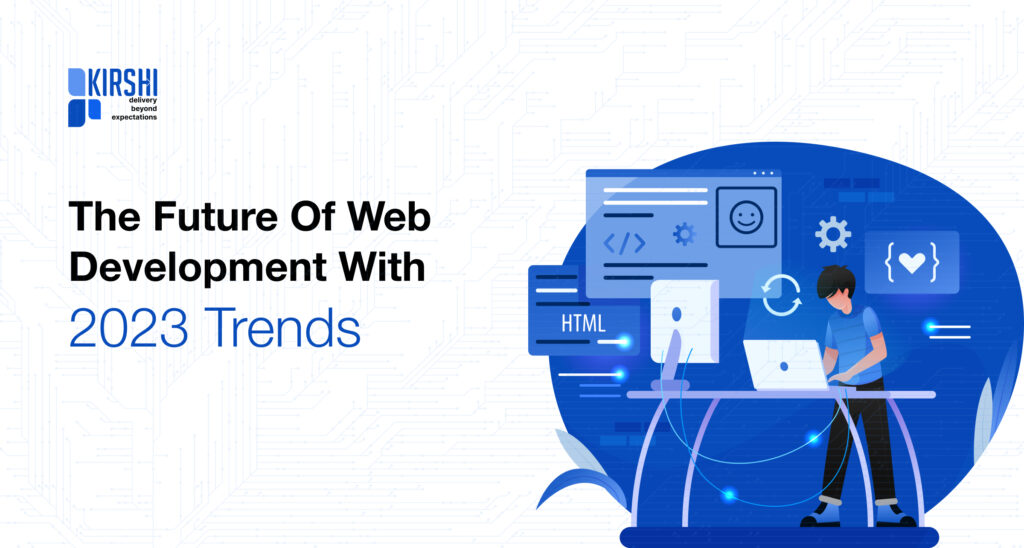
The future of web development with 2023 trends

The future of web development with 2023 trends In the dynamic realm of website development, change is the only constant. With each passing day, something new emerges in the market, pushing the boundaries of advancement. To thrive amidst this continuous evolution, businesses and developers must become pioneers of tech innovation. They embark on an endless quest to uncover better trends that shape the future of web development. At Kirshi Technologies, we understand the significance of staying ahead in this fast-paced landscape. That’s why we bring you the top 10 web development trends for 2023. Join us as we take a closer look at these trends that hold the key to unlocking the next level of digital experiences.   Progressive Web Apps (PWAs) Among the list of web development trends, one technology stands out: PWA (Progressive Web App). It combines the functions of a website with a full native mobile app experience. PWAs can be installed and launched as stand-alone apps, appearing on home screens and taskbars. They operate independently without the need for dependency on browsers. In simple terms, you can use these apps just like normal hybrid apps, with the added benefit of saving device storage and enjoying the power of seamless installation.   Accelerated Mobile Pages (AMP) It’s one more trend in the web development industry, conceptualized by Google and Twitter: AMP (Accelerated Mobile Pages). This open-source project focuses on enhancing functionality and improving user retention. Similar to PWAs, AMP delivers lightweight pages that load quickly on all smart devices, typically within 0.7 to 2 seconds. By relying on web caching, it boosts web app performance. AMP-optimized pages offer simplified design and basic features, making them convenient and mobile-responsive. With the rise of 5G internet technology, brands can create native applications to enhance the user experience. Implementing the AMP plugin can also help businesses save expenses.   Dark Mode UI Dark mode has become an immensely popular trend worldwide, and we expect its popularity to soar even higher in the coming years. Thanks to its visually appealing design pattern, dark-themed websites make it easier for users to enjoy web browsing on any device. Tech giants like Google, Facebook, Reddit, and Twitter have already embraced dark mode UI, and many more are following suit. This trending technology not only reduces blue light and lowers eye strain but also provides a seamless transition between dark and light modes. In the latter years, dark mode may even become the defacto default for web and mobile applications.   Motion UI In the realm of web design and development trends this year, startups are prioritizing user experience and investing fewer resources in appearance alone. To increase the chances of being noticed by promising users, it’s crucial to have beautifully designed apps and websites. Visual design has now become an effective marketing strategy, and many websites are incorporating motion UI to captivate users. As we move forward, we can anticipate more websites adopting motion UI in their layouts. In the upcoming years, this trend will extend to digital products, as it offers a spontaneous and precise method through CSS transitions and integrated custom animations. Developers can save time in digital product creation and reduce expenses for product owners by leveraging the standalone library of animated components.   Blockchain Technology Blockchain technology is steadily increasing in popularity and has become one of the upcoming trends in web development. It offers benefits such as traceability, verification, and secure transactions, making it ideal for multistep transactions and reducing compliance costs. Blockchain also speeds up data transfer, aids in contract management, and facilitates audits of product origins. Over the last decade, the popularity of cryptocurrencies, which are encompassed by blockchain technology, has increased significantly. This is evident as more payment systems, including major players like AWS and Microsoft Azure Blockchain Service, decide to accept Bitcoin. In 2023, we can expect major advancements and increased usage of blockchain as a service or BaaS. Experts predict a future where seamless collaboration between blockchain and Web 3.0, the innovative internet, opens new possibilities. Several online platforms, including tech giants like Facebook and Google, are exploring this convergence and working on new innovations that combine the two sectors.   Cybersecurity In 2023, cybersecurity emerges as a paramount concern, growing even more crucial in the face of advancing technology and our increasing reliance on it. It encompasses safeguarding computer systems and networks against information theft, damage, or disruption. As we automate more processes, the risk of data theft escalates, prompting the development of cutting-edge technologies, such as algorithms for countering phishing attacks. Web developers can bolster cybersecurity by employing web frameworks like Django or Ruby on Rails to mitigate threats like Cross-Site Scripting (XSS), implementing robust encryption techniques to protect sensitive data, and staying vigilant through the monitoring of suspicious activities to thwart potential attacks.   AI–Powered Chatbots Proactive user support through chatbots has been a prominent trend in web development for many years. AI-powered chatbots, such as Replika and ChatGPT, have made a significant impact across various industries. In 2023 and the years to come, we can expect this trend to become even more versatile with the utilization of natural language processing, machine learning, and data retrieval methods. Organizations are leveraging these chatbots to efficiently handle text or voice chats, ensuring fast operations and enhancing the client experience. With 24/7 proactive client support, these chatbots excel in providing information, resolving issues, and promptly responding to queries. They facilitate a great digital experience, leading to increased lead generation and improved customer engagement. Many competent B2C organizations now serve their clients through chatbots within popular platforms like WhatsApp and Facebook, making chatbots a common feature in industries such as finance, education, travel, healthcare, and more. –   Serverless Architecture Serverless architecture allows developers to create and run applications and services without the need to manage infrastructure. Software engineers can develop mobile applications that perform like native apps, and end users can seamlessly perform tasks using serverless functions. Cloud vendors provide serverless computing, which

Blog

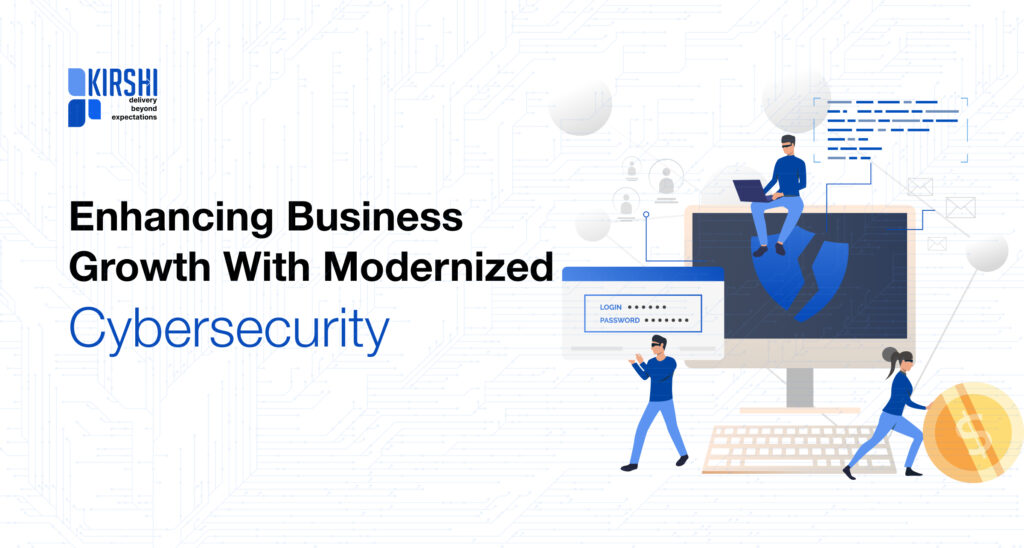
Enhancing business growth with modernized cybersecurity

Enhancing business growth with modernized cybersecurity As businesses embrace digital transformation, the significance of cybersecurity becomes increasingly evident. Beyond just safeguarding, modernizing cybersecurity establishes a foundation of trust, innovation, and resilience, driving organizations toward enduring growth. In this article, we’ll delve into the ways in which the modernization of cybersecurity can fuel business expansion and confer a competitive edge.   Cultivating Digital Confidence Trust serves as the bedrock of fruitful business interactions, particularly in the digital landscape. Contemporary cybersecurity methods play a pivotal role in cultivating and upholding this trust, ensuring the protection of customer data, sensitive details, and intellectual assets. In an era marked by extensive data collection, storage, and utilization, it is imperative for customers and partners to have the assurance that their information remains secure. A security breach not only erodes trust but also results in financial setbacks, regulatory penalties, and reputational damage. Through investments in advanced cybersecurity strategies, businesses establish themselves as trustworthy stewards of data, fortifying customer confidence and fostering lasting loyalty.   Facilitating Innovation Innovation stands as a pivotal driver of business expansion. Yet, the path to innovation frequently entails embracing emerging technologies like cloud computing, IoT, AI, and remote work solutions, which bring forth novel vulnerabilities. Modern cybersecurity solutions are tailored to adapt to these technologies while offering a formidable shield against ever-evolving threats. An anticipatory cybersecurity approach nurtures an atmosphere where experimentation and the assimilation of new technologies can transpire without jeopardizing security. Consequently, this expedites innovation, empowering businesses to introduce fresh products, services, and operational paradigms.   Safeguarding Regulatory Adherence Adhering to industry regulations and data protection statutes is imperative, leaving no room for compromise. Non-compliance carries the weight of significant penalties and damage to reputation. Contemporary cybersecurity methodologies harmonize seamlessly with these regulations, instituting protocols that safeguard data privacy, fortify transactions, and ensure meticulous data management. Through the adoption of a holistic cybersecurity framework, organizations not only fulfill regulatory mandates but also underscore their dedication to conscientious data governance, ultimately elevating their credibility and standing.   Enhancing Business Resilience The occurrence of disruptions, whether stemming from cyberattacks, natural calamities, or unforeseen incidents, can significantly disrupt business operations. Contemporary cybersecurity methodologies encompass robust disaster recovery and incident response strategies that facilitate swift recovery from such disruptions. This not only reduces downtime but also guarantees minimal impact on customer service, revenue generation, and overall business continuity. An organization capable of weathering disruptions is better poised for sustained growth.   Setting Apart from Competitors Customers and collaborators tend to gravitate towards businesses that prioritize their security and privacy. By implementing advanced cybersecurity measures, businesses underscore their dedication to safeguarding the interests of their stakeholders. This distinction can sway purchasing decisions, draw in new clientele, and fortify partnerships, thereby contributing substantively to business expansion.   Elevating Workforce Efficiency Contemporary cybersecurity measures not only shield the organization from external risks but also enable employees to enhance their work performance. Through secure remote access, proficient mobile device management, and collaborative tools, employees can fulfill their responsibilities while upholding security standards. This adaptability not only amplifies productivity but also allures and retains top-tier talent, nurturing a constructive workplace atmosphere that bolsters business expansion.   Modernizing cybersecurity isn’t just a defensive strategy; it’s a proactive investment in your business’s future. By fostering trust, enabling innovation, supporting compliance, ensuring business continuity, differentiating from competitors, enhancing productivity, and partnering with Kirshi Technologies to modernize cybersecurity services, you can harness a powerful enabler for sustainable business growth. As organizations continue to expand, a strong cybersecurity foundation becomes a pivotal asset, unlocking new opportunities and securing a competitive edge. Social Share: Previous Post Recent blogs March 26, 2025 Enhancing business growth with modernized cybersecurity Enhancing business growth with modernized cybersecurity As businesses embrace digital… November 23, 2024 Strategic Integration of Custom Web App Development, Mobile… Strategic Integration of Custom Web App Development, Mobile Application Development,… Load more

Blog

Strategic Integration of Custom Web App Development, Mobile Application Development, and Machine Learning Solutions for Business Success

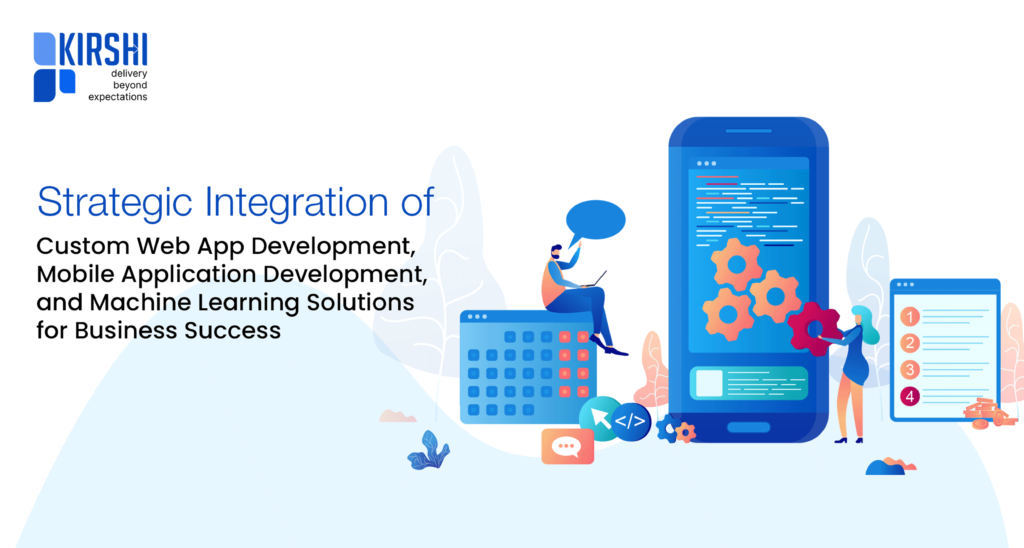
Strategic Integration of Custom Web App Development, Mobile Application Development, and Machine Learning Solutions for Business Success In today’s dynamic and competitive business environment, the integration of custom web applications, mobile app development, and machine learning solutions has become indispensable for success. Businesses are continually seeking innovative ways to enhance user experiences, streamline operations, and gain a competitive edge. This blog explores the importance of custom web applications, the soaring mobile app market, and the transformative impact of ML solutions on various business challenges.   Custom Web Applications: A Game-Changer for Businesses Custom web applications are not just websites; they are interactive, function-specific tools that empower users to perform tasks seamlessly. Unlike static websites, web applications focus on functionality and provide businesses with the tools to directly interact with customers through automated processes. Examples range from online ordering forms to collaboration tools like Basecamp. The flexibility and tailored features of custom web applications make them an essential ingredient for businesses aiming to improve customer communication, streamline operations, and boost productivity.   Why Custom Web Applications are Vital for Businesses: Efficient Communication: Web applications facilitate effective communication with consumers, enabling businesses to gather real-time feedback and address issues promptly. Data Management: Custom web applications simplify data management, allowing businesses to uncover patterns and problems affecting the consumer experience. Enhanced User Experience: Design, features, technology, and market fit are key characteristics of successful custom web applications that improve customer interactions.   Overcoming Challenges of Custom Web Development Solutions While custom web app development offers tailored solutions, businesses often face challenges such as a lack of precise criteria, high costs, and integration issues with existing systems. Proper planning, clear communication, and addressing security concerns are essential to overcoming these challenges. Strategies for Successful Custom Web Development: Clear Communication: Precise communication of business needs is crucial to avoid misunderstandings and delays in custom web application development. Cost Considerations: While custom web app development may involve higher initial costs, it provides the flexibility to design unique products and adapt to changing user and market demands. Integration Challenges: Integration with existing systems can be challenging, but with proper planning and the right development team, businesses can overcome these hurdles.   Mobile Application Development: Navigating the Competitive Landscape The mobile app market is experiencing exponential growth, with revenue projected to reach over $935 billion in 2023. As businesses strive to harness the immense potential of mobile apps, they face challenges such as fierce competition, customer lifetime value prediction, and customer segmentation. Custom mobile application development emerges as a strategic solution to address these challenges. Challenges Faced in Mobile App Development: Diverse Development Approaches: Navigating between native, cross-platform, and hybrid development poses a dilemma, as each approach comes with trade-offs in performance, features, and development costs. User Experience Complexity: Ensuring seamless user experiences involves overcoming hurdles such as usability practices, loading times, and compatibility across various devices and screen sizes. Striking the right balance is crucial for user adoption. Operating System Fragmentation: Adapting to the nuances of iOS, Android, and Windows introduces complexities, requiring developers to fine-tune applications for optimal performance across different platforms. Financial Management and Funding Uncertainty: Estimating development costs accurately and securing funding poses significant challenges, influencing the feasibility of transforming innovative app ideas into reality. Intense Market Competition: Standing out in a saturated mobile app market demands effective promotion and discoverability strategies, ensuring that well-designed and high-performing apps don’t go unnoticed by potential users.   Ensuring App Security in a Connected World Security concerns are paramount in the digital age, and mobile app owners must prioritize protecting user data. Developers can employ strategies like encryption, SSL certificates, and obfuscation codes to secure mobile applications and prevent potential threats. Securing Mobile Applications: Encryption: Protecting app communication with encryption prevents data breaches and enhances security. SSL Certificates: SSL certificates assure users of code integrity and security, eliminating untrusted software warnings. Obfuscation Codes: Creating complex and hard-to-understand app codes helps deter reverse engineering attempts.   ML Solutions: Transforming Business Operations Machine learning extracts meaningful insights from data, offering businesses the ability to solve complex problems and enhance scalability. While the benefits are immense, companies face challenges such as a lack of raw data, infrastructure, and data processing capabilities. The Impact of Machine Learning in Business: Smartphone Applications: Virtual assistants like Siri leverage machine learning for speech recognition, and image analysis enhances camera functionalities. Transport Industry: Ride-hailing apps utilize machine learning for dynamic pricing and route optimization, revolutionizing the transport sector. Recommendation Engines: Companies like Netflix and Amazon use machine learning-based recommendation systems to personalize user experiences.   To wrap it up The integration of custom web applications, mobile app development, and machine learning solutions is crucial for businesses aiming to thrive in the modern landscape. Custom solutions provide tailored experiences, enhance communication, and streamline operations, while machine learning empowers businesses with predictive insights and efficiencies. At Kirshi, we pride ourselves on our expertise in crafting solutions that seamlessly incorporate custom web applications, mobile app development, and advanced machine learning technologies. Through our innovative approach, we empower clients to thrive in dynamic business environments. Our solutions, rooted in strategic planning and robust security measures, ensure enhanced risk management and sustained success. Connect with Kirshi’s experts for transformative solutions shaping the future of business. Let us guide your journey where technology meets innovation, unlocking unparalleled opportunities for your business. Social Share: Next Post Recent blogs March 26, 2025 Enhancing business growth with modernized cybersecurity Enhancing business growth with modernized cybersecurity As businesses embrace digital… November 23, 2024 Strategic Integration of Custom Web App Development, Mobile… Strategic Integration of Custom Web App Development, Mobile Application Development,… Load more

Scroll to Top